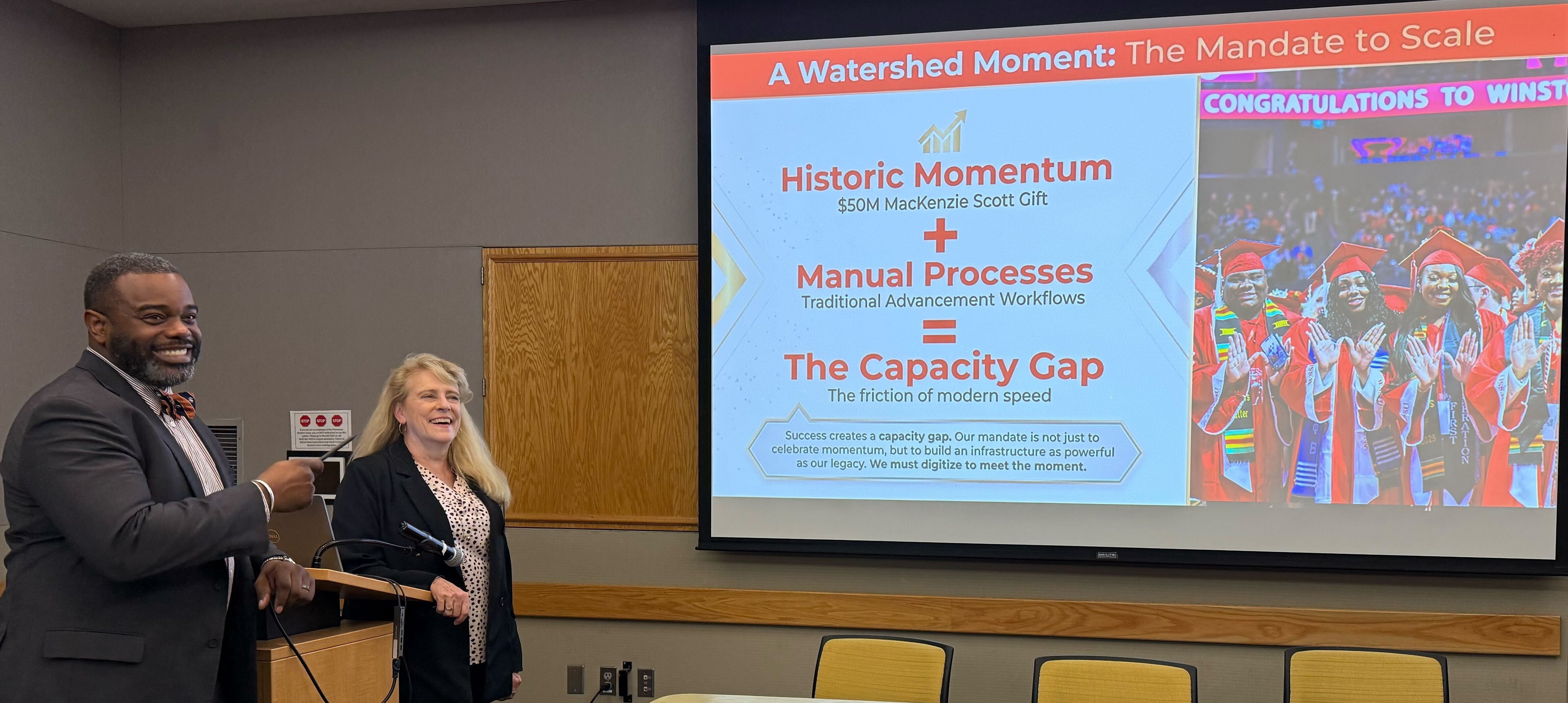
Kevan asked a great question preparing for our presentation together.
How do you build infrastructure capable of sustaining transformational growth without losing the culture, the intimacy, and the humanity that make your institution irreplaceable?
The session, titled "The Tip of the Spear: Scaling Legacy Through Innovation," explored what it takes to build an AI-powered advancement system to serve people. Kevan L. Turman, MSR, Vice Chancellor for University Advancement at Winston Salem State University was dynamic sharing his team’s experience and answering many audience questions who wanted to know more. Co-presenter Sabre Leek, CEO of Sleek shared the technology and the processes that were used to hyper-speed into AI and Digital Employees.
Legacy Is Not a Limitation. It Is the Standard.
HBCUs carry something that cannot be replicated. The culture. The sense of shared mission. The depth of relationship between institutions and their communities. That is not a soft consideration. It is a strategic one.
As institutions like WSSU grow, the challenge is not whether to adopt new technology. It is whether the technology they adopt is capable of honoring what already exists. Too often, advancement teams are handed tools that create more administrative burden, not less. More data to enter. More processes to maintain. Less time for the work that actually moves donors.
The conversation at WSSU started from a different premise. Technology should amplify human connection, not compete with it.
From Decision to Go-Live: A Timeline Worth Noting
What makes WSSU's story particularly striking is how fast it moved. In January 2026, WSSU made the decision to invest in AI and future-proof its advancement technology. By late February, Sleek had converted WSSU's data from their legacy system into Salesforce Education Cloud. Through February and March, the WSSU team was actively learning Salesforce Education Cloud and Agentforce. By March and April, they were working with Sleek to apply those capabilities to specific institutional priorities including an upcoming giving day, their radio station donor base, and prospecting strategy.
What typically takes six to nine months came together in a fraction of that time. That is not an accident. It is what the right architecture, paired with the right advancement team and implementation partner, make possible.

What AI-Powered Advancement Actually Looks Like
Sabre and Kevan covered a range of interconnected priorities: AI-powered advancement ecosystems, unified CRM strategy, agentic AI and frontline fundraising readiness, and how institutions can scale institutional knowledge across teams without creating a dependency on any single person.
A theme Kevan returned to throughout was the importance of ethical AI use. Not AI for its own sake, and not automation as a replacement for human judgment, but AI as a deliberate tool for extending the reach of the people already doing meaningful work. That framing shaped everything that followed.
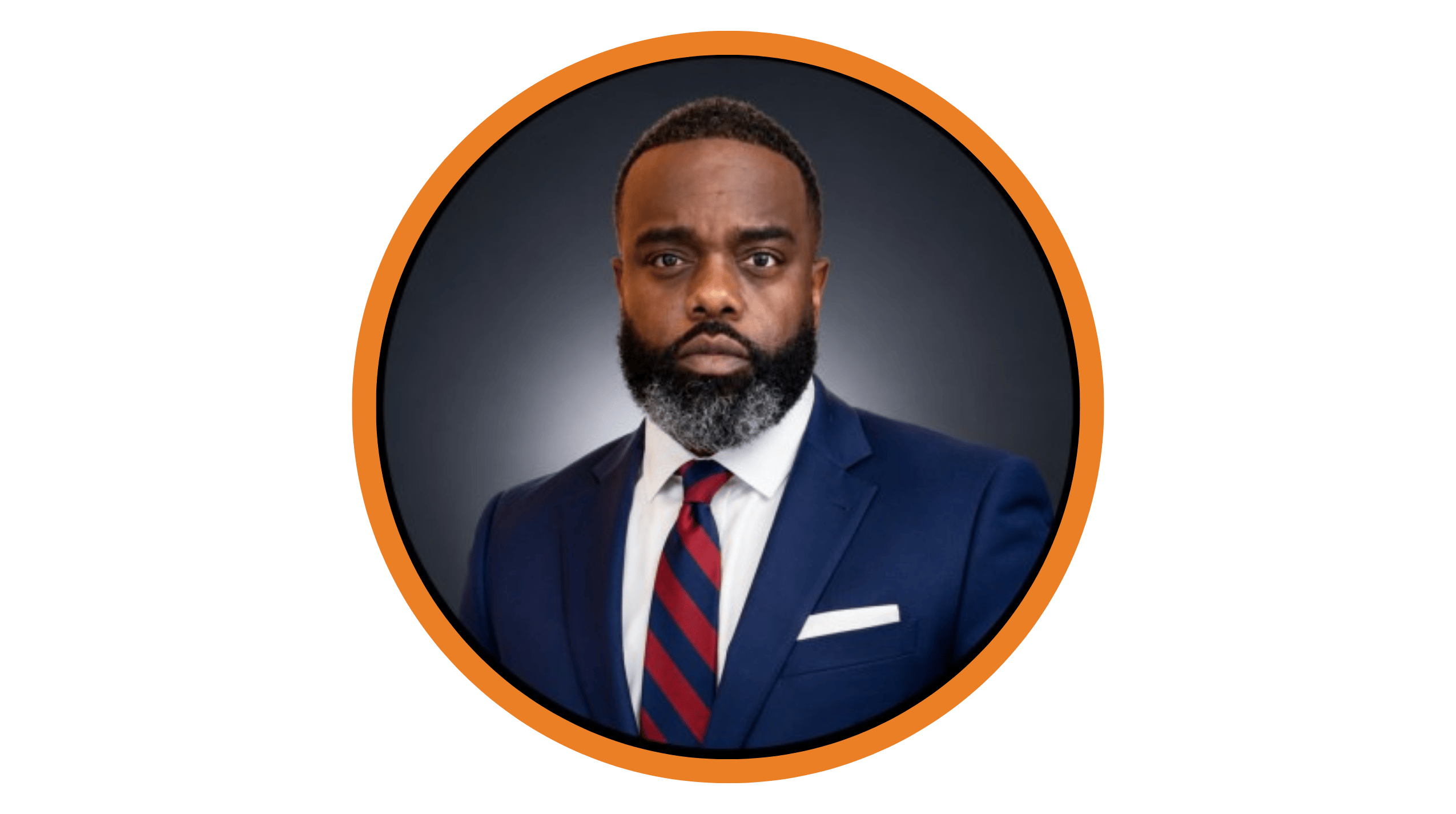
"We use AI to clear the digital noise so the human touch is felt by more people, more often."
Kevan L. Turman, MSR
Vice Chancellor for University Advancement & Executive Director of the Winston Salem-State Foundation

The session brought that principle to life through three interconnected stories.
Seeing the Full Story of a Donor
The first story focused on prospect research: what it looks like when a gift officer opens a donor record and finds a full narrative picture of who that person is, where they have been, and why they might care about giving now.

Responding in the Moment That Matters
The second centered on a challenge many advancement teams will recognize. Through their own frontline work, the WSSU team had identified a segment of donors who were fiercely loyal to the institution but highly siloed in how and why they gave. Human observation surfaced the pattern, and AI gave them the tools to understand what motivates that group, find more like them, and build outreach that actually connects. If your team has ever sensed that a segment of your donor base is underengaged but not unreachable, that story is worth paying attention to.
Every Gift Officer, Fully Equipped
The third addressed the gift officer experience directly, asking what it would look like if every gift officer could walk into a donor conversation with the depth and preparation of your most experienced fundraiser. With WSSU planning to bring on four new development officers this year, that question has immediate practical stakes.
Agentic AI plays a specific role throughout. Rather than waiting for a staff member to pull a report or manually review a portfolio, AI agents surface the right information at the right time, from action plans and donor briefings to engagement signals. The work that used to take hours now happens in the background, so frontline fundraisers stay focused on relationships.

Donor Intelligence at Scale
None of this works without data. And not just any data.
Sleek's QSS™ Data Enrichment suite (QSS30) gives institutions on-demand access to many new areas of intelligence including more than 480 fields.
This is not a one-time data append. It is dynamic, on-demand enrichment that feeds directly into the CRM and into the AI agents that act on it. When a gift officer opens a donor record, they are not guessing. They are working from a complete, current picture of who that person is and what their relationship to the institution looks like.
For advancement teams where staff capacity is often stretched thin, this changes the math. Fewer hours spent on research. More hours spent on the conversations that convert.
Infrastructure That Carries the Culture Forward
The institutions doing this well are not adopting technology to look modern. They are building infrastructure because they are serious about growth.
And at WSSU, the vision extends well beyond advancement. What is being built now becomes the foundation for how the institution understands and supports its community across the entire student and alumni lifecycle, from enrollment through career services and beyond. Advancement is the tip of the spear, but the architecture is built to scale campus-wide.
Scaling legacy means building systems that carry the culture forward. It means deploying AI in ways that reflect institutional values. It means choosing partners who understand that the goal is never to replace the human at the center of advancement work, and never to deploy technology without intention. It is to give that human everything they need to do their best work, in ways that reflect the values of the institution they serve.
That is exactly the kind of problem that makes this work meaningful.
If your institution is asking the same questions WSSU is asking, we would be glad to continue that conversation.
Inspired by WSSU's commitment to their community? You can support their mission directly at wssu.edu/give.